
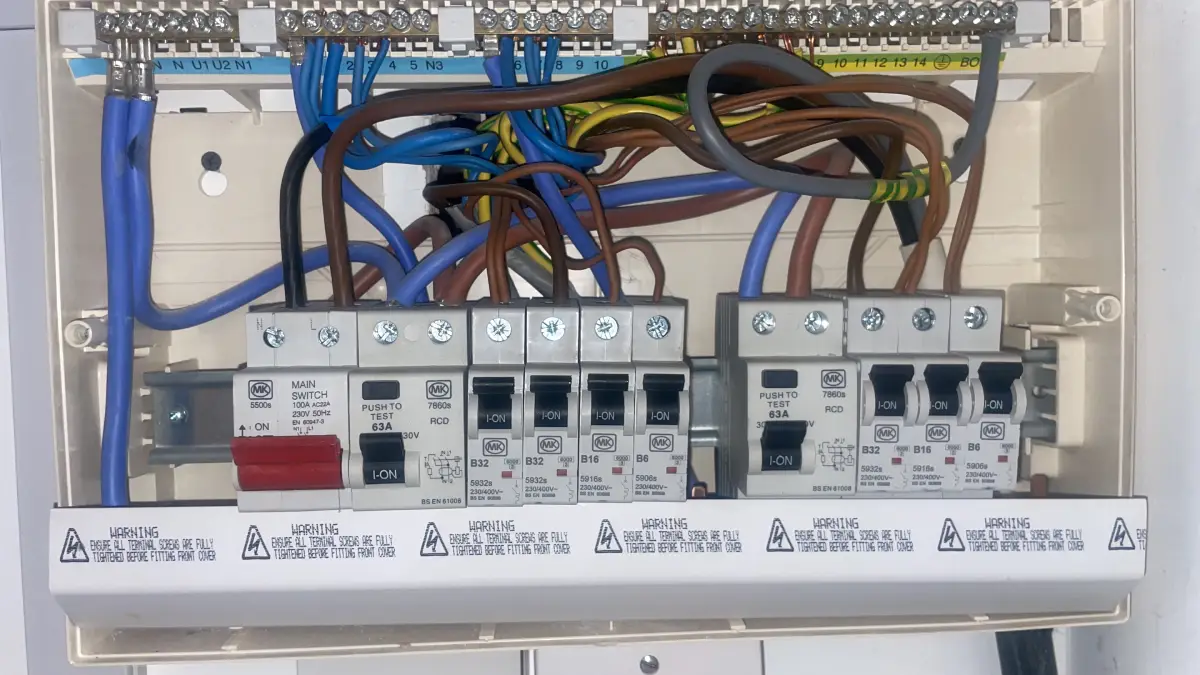
If your RCD keeps tripping, it usually means there’s an electrical fault somewhere in your system—most commonly current leakage. In simple terms, electricity is escaping where it shouldn’t, and the RCD is cutting the power to protect you.
This is one of the most common issues in UK homes, and it can feel random or frustrating, especially when it keeps happening. But from experience, most cases aren’t as serious as they seem—once you go through things step by step, the cause is often straightforward.
The key thing to remember is this:
If your RCD keeps tripping, it’s doing its job properly.
Table of Contents
Quick Answer
If your RCD keeps tripping, it’s usually because:
- A faulty appliance is leaking current
- Moisture has got into a socket or fitting
- A cable is damaged somewhere
- There’s a fault on one of your circuits
In most cases, the issue comes down to an appliance or water getting where it shouldn’t.
Signs Your RCD Is Tripping
You’ll usually notice:
- Power going off across multiple areas of the house
- Lights and sockets cutting out together
- The RCD switch in the consumer unit dropping down
- The power returning after reset, then tripping again
- It happening when using certain appliances
A good way to tell it’s the RCD is this:
If more than one circuit goes off at once, it’s usually the RCD.
What Does an RCD Actually Do?
An RCD (Residual Current Device) is a safety switch.
It constantly checks the balance of electricity flowing in and out of a circuit. If it detects even a small imbalance, it trips instantly.
This protects against:
- Electric shock
- Faulty appliances
- Fire risks
So when your RCD keeps tripping, it’s not being faulty—it’s responding to a problem.
Common Causes of RCD Tripping
Let’s go through the real causes I see most often on jobs.
1. Faulty Appliances (Most Common Cause)
This is the first thing I always check.
Appliances can develop faults over time, especially:
- Kettles
- Washing machines
- Dishwashers
- Electric heaters
- Fridges and freezers
Even a small internal fault can cause leakage and trip the RCD.
I’ve been to loads of jobs where everything seemed complicated—but it was just a faulty kettle.
2. Moisture or Water
This is a big one in UK properties.
Water can get into:
- Outdoor sockets
- Garden lighting
- Garage electrics
- Bathroom fittings
Rain, condensation, or damp conditions can all lead to tripping.
I’ve seen RCDs trip every time it rains due to outdoor fittings.
3. Damaged Cables
Less common, but more serious.
This can happen due to:
- Drilling into cables in walls
- Rodent damage
- Old or worn insulation
These faults usually require proper testing to locate.
4. Faulty Sockets or Accessories
Loose or damaged sockets, switches, or junction boxes can also cause leakage.
Sometimes it’s not obvious until tested properly.
5. Multiple Small Faults
Sometimes it’s not just one issue.
You can get:
- Slight leakage from one appliance
- Slight moisture somewhere else
Together, they trip the RCD.
What I’d Do First (Quick Method)
If I walked into your house with this problem, this is exactly what I’d do:
- Unplug everything
- Reset the RCD
- Plug appliances back in one by one
This simple process solves most cases.
It’s quick, safe, and usually gives you an answer straight away.
Step-by-Step: How to Find the Fault
If your RCD keeps tripping, follow this method properly.
Step 1: Turn Off and Unplug Everything
Remove all appliances from sockets.
This removes all possible sources of leakage.
Step 2: Reset the RCD
Switch the RCD back on.
- If it stays on → move to next step
- If it trips immediately → likely wiring or circuit issue
Step 3: Plug Appliances Back One by One
Reconnect each appliance slowly.
Wait a few seconds between each.
When it trips again, the last appliance is usually the cause.
Step 4: Identify the Circuit
If it still trips with everything unplugged:
- Turn off all circuit breakers
- Turn them on one at a time
This helps you isolate the faulty circuit.
Step 5: Check Outdoor Areas
Always check:
- Outdoor sockets
- Garden lighting
- Garage or shed supply
Moisture is very common here.
Safety Warning
Electricity is dangerous—don’t take risks.
Stop and call a professional if:
- You smell burning
- You see damaged cables
- The RCD trips instantly every time
- You are unsure what you’re doing
When Should You Call an Electrician?
Call a qualified electrician if:
- Your RCD keeps tripping with nothing plugged in
- You cannot find the faulty appliance
- The issue keeps happening
- You suspect damaged wiring
At that point, proper testing equipment is usually needed.
What Most People Get Wrong
One of the biggest mistakes:
People just keep resetting the RCD without investigating
Another common mistake:
Assuming it’s a major wiring fault straight away
In reality, most cases are simple.
Real Electrician Insight
On many jobs, customers panic and think something serious is wrong.
But most of the time:
- It’s a kettle
- Or a washing machine
- Or moisture in an outdoor socket
I’ve seen people replace multiple appliances when the issue was actually outside in the rain.
Final Thoughts
If your RCD keeps tripping, don’t ignore it—but don’t panic either.
In most cases:
- It’s a faulty appliance
- Or moisture causing leakage
By following a step-by-step process, you can usually find the issue quickly. If not, it’s best to get it checked properly before it turns into something more serious.
Frequently Asked Questions
Why does my RCD keep tripping randomly?
Usually due to an intermittent fault, often from moisture or an appliance.
Can rain cause RCD tripping?
Yes, especially with outdoor sockets or lighting.
Is it dangerous if my RCD keeps tripping?
Yes, it indicates a fault—but the RCD is protecting you.
Can I fix it myself?
You can identify the cause, but wiring faults should be handled by an electrician.
What should I unplug first?
Start with high-power appliances like kettles, washing machines, and heaters.
Final Thoughts
If your RCD keeps tripping, don’t ignore it—but don’t panic either.
In most cases:
- It’s a faulty appliance
- Or moisture causing leakage
By following a step-by-step process, you can usually find the issue quickly. If not, it’s best to get it checked properly before it turns into something more serious.
Related Posts
- Fuse box keeps tripping (full guide)
- Fuse box trips when kettle is on
- Fuse box trips with nothing plugged in
- Difference between MCB and RCBO